

How to Build a Trading Watchlist You Can Actually Follow
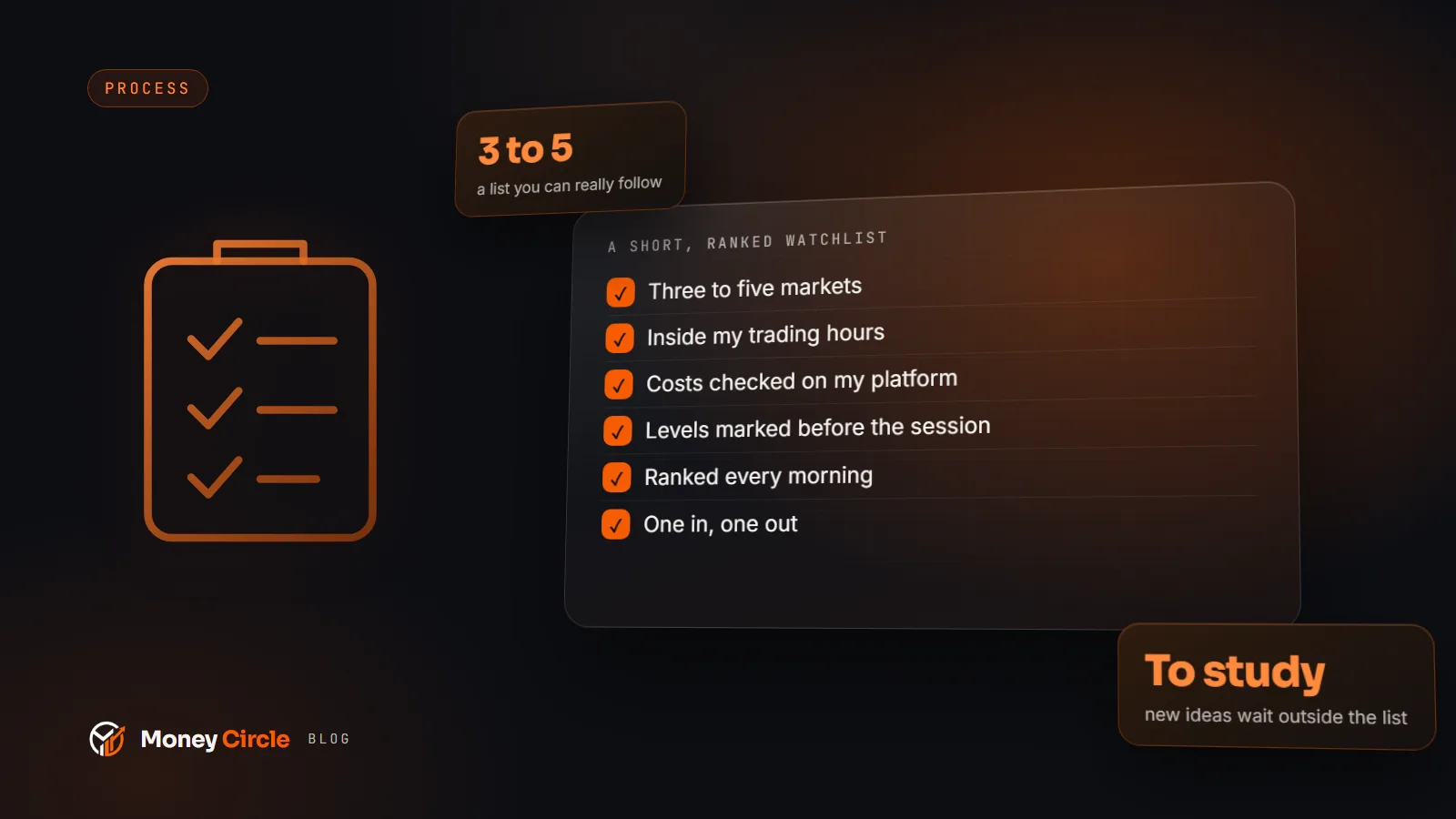
A good watchlist is short, ranked and tied to your plan. Learn how to choose markets, set criteria and keep the list from growing out of control.
Open a trading platform and it offers thousands of markets. Many beginners respond by adding dozens of them to a watchlist, flicking between charts and reacting to whatever moves. The result is a lot of screen time and very little learning. A watchlist is meant to save you attention, not spend it.
This guide shows how to build a short, purposeful watchlist, how to decide what earns a place, how to review it, and how to prevent it from swelling again. It is about process, not about any particular market. Nothing here is a recommendation to trade anything.
What a watchlist is for
A watchlist answers one question each day: where will I look for my setups? It is a filtered list of markets that fit your plan, not a list of everything interesting.
A good one does three things:
- Limits your attention. You can follow a few markets well. You cannot follow forty.
- Builds familiarity. The longer you watch a market, the better you know how it behaves: its normal range, its busiest hours, its reaction to news.
- Supports the plan. The markets on the list are the ones your written rules were designed for.
Start with your constraints
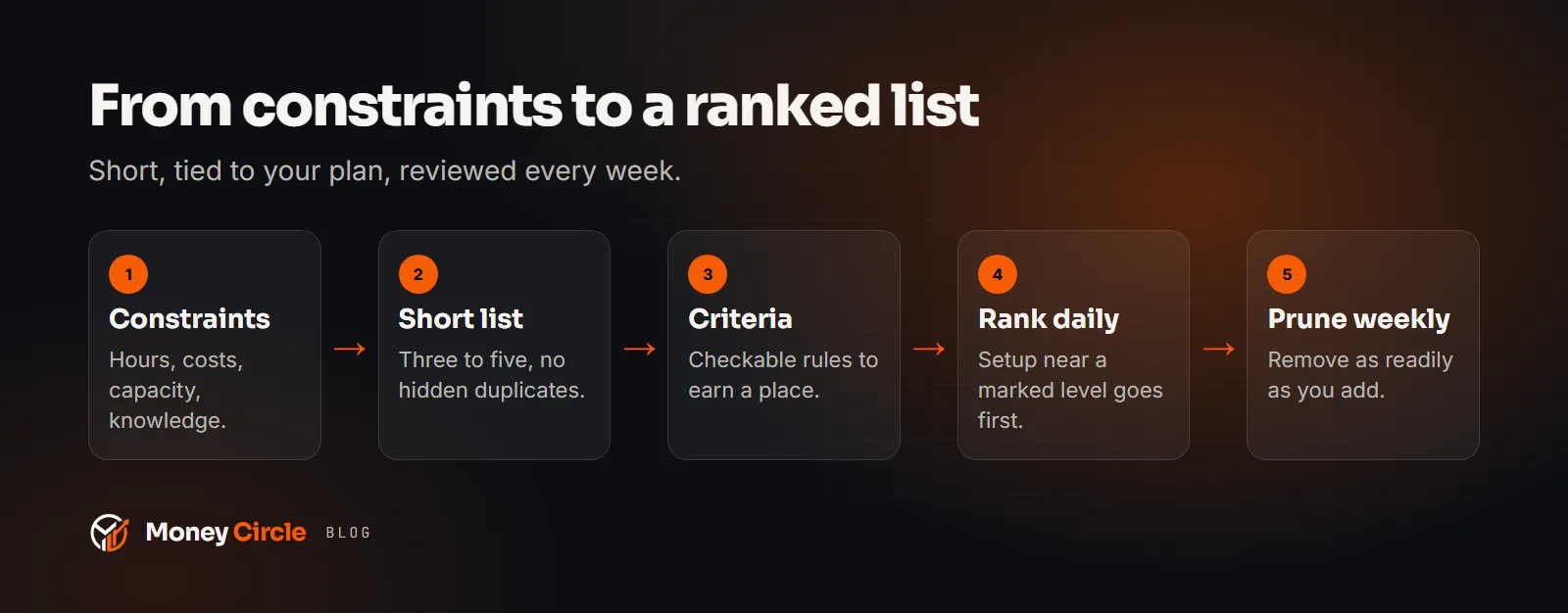
Before you add any market, write down the limits that your life and your account impose:
1. Your hours. When can you actually trade? A market that is only active while you sleep is a poor fit. Our guide to trading sessions explains how to match markets to your window. 2. Your account size and costs. Some markets have wide spreads or large minimum sizes that make small stops expensive. Check costs for each market on your platform before adding it. 3. Your capacity. How many charts can you review in your pre-market routine without rushing? Be honest. For most beginners the answer is a small number. 4. Your knowledge. Can you explain what moves this market? You do not need an economics degree, but you should know which scheduled events matter for it.
Pick a starting list of three to five
Begin small. A short list is easier to study and easier to review. A practical way to choose:
- Pick one or two markets you can follow during your chosen hours.
- Add one or two others only if they behave differently enough to matter, for example a currency pair and a stock index, so you are not holding the same bet twice.
- Stop at five until you have a reason to go further.
Set entry criteria for the list itself
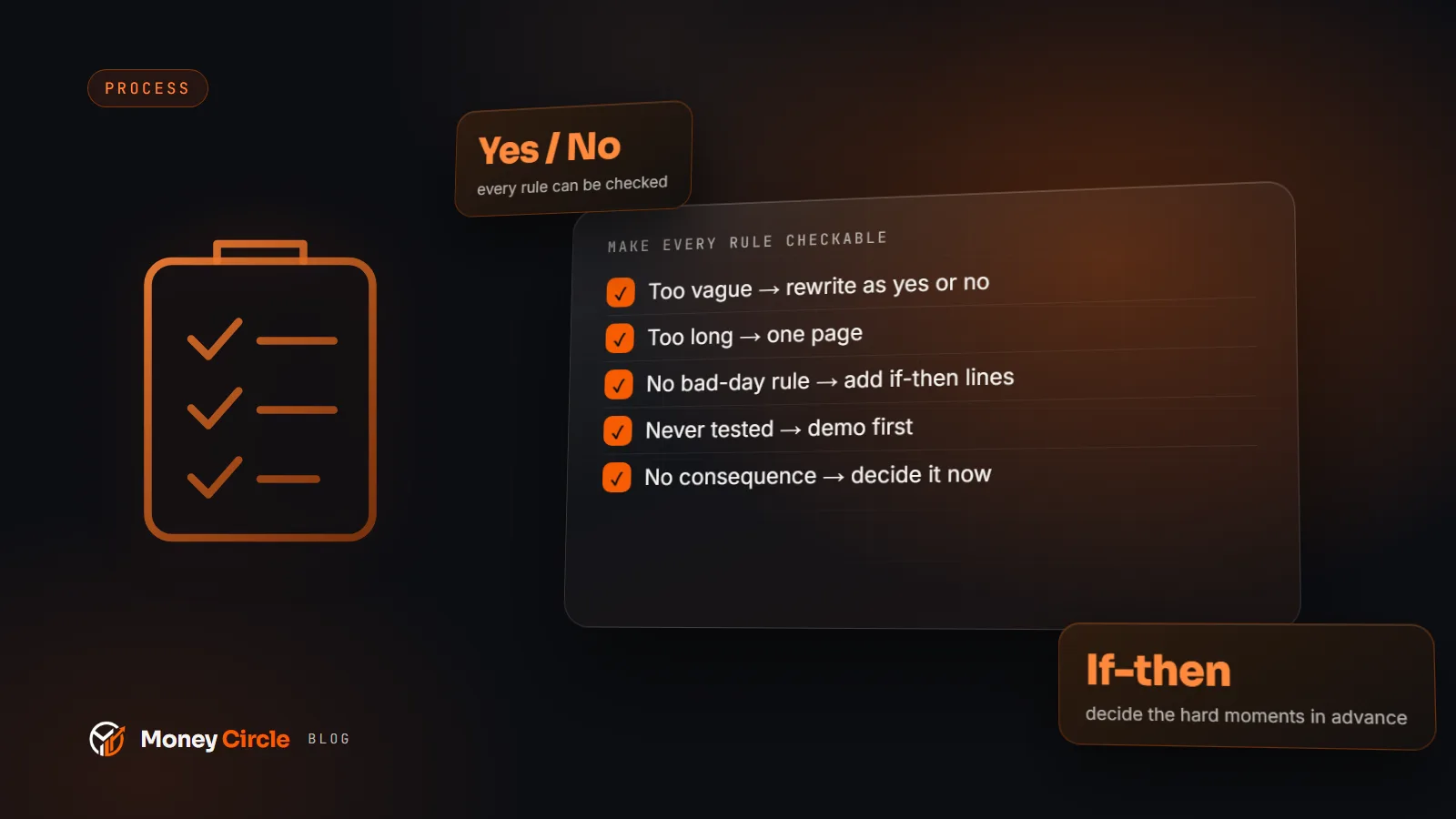
Treat the watchlist as something with entry rules, not a pile. Write a few checkable conditions for a market to be on the list, for example:
- It trades during my chosen window.
- Its typical spread is small compared with my usual stop distance.
- I can name the scheduled events that move it.
- I have at least some history of journal entries on it, or I have a plan to gather them.
Rank the list each day
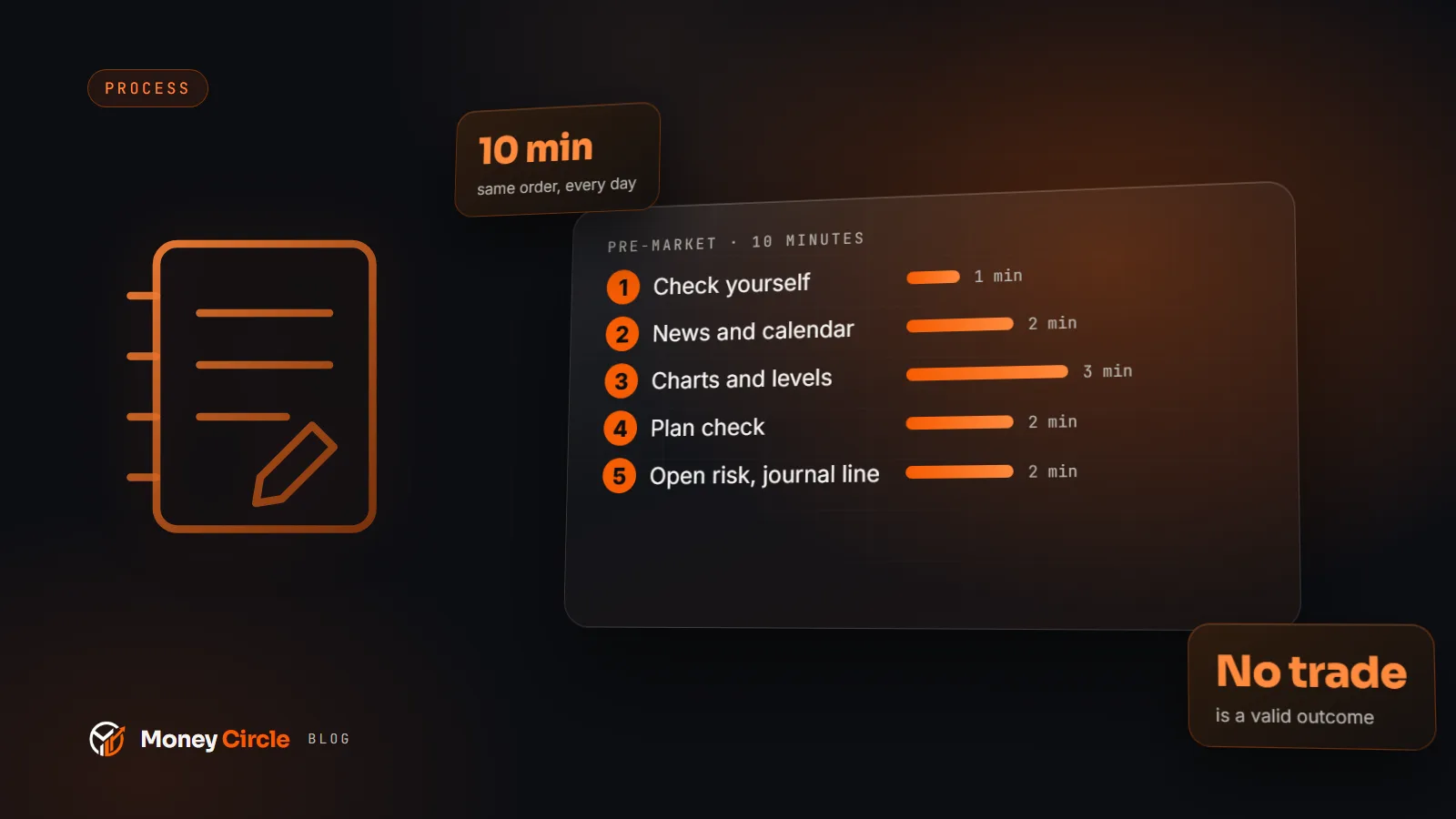
Once the list is short, do a quick ranking in your pre-market routine. Our pre-market routine for traders fits this in a few minutes. For each market, note:
- Where is price relative to the levels you have marked? Near a level you care about, or in the middle of nowhere?
- What is scheduled? Any release that could make the market jump during your window?
- Is there a setup forming that matches a written rule? Yes, maybe or no.
Draw the levels in advance
A watchlist works best when the charts are prepared before the session. For each market, mark the levels that matter on the timeframes you use: recent swing highs and lows, areas where price has reacted repeatedly, and any level your rules refer to. Save the chart layout if your platform lets you.
When the session opens, you then react to price reaching a marked level instead of hunting for something to do. That one change reduces impulsive trades.
Review and prune weekly
Add a few minutes to your weekly review for the list itself. Ask:
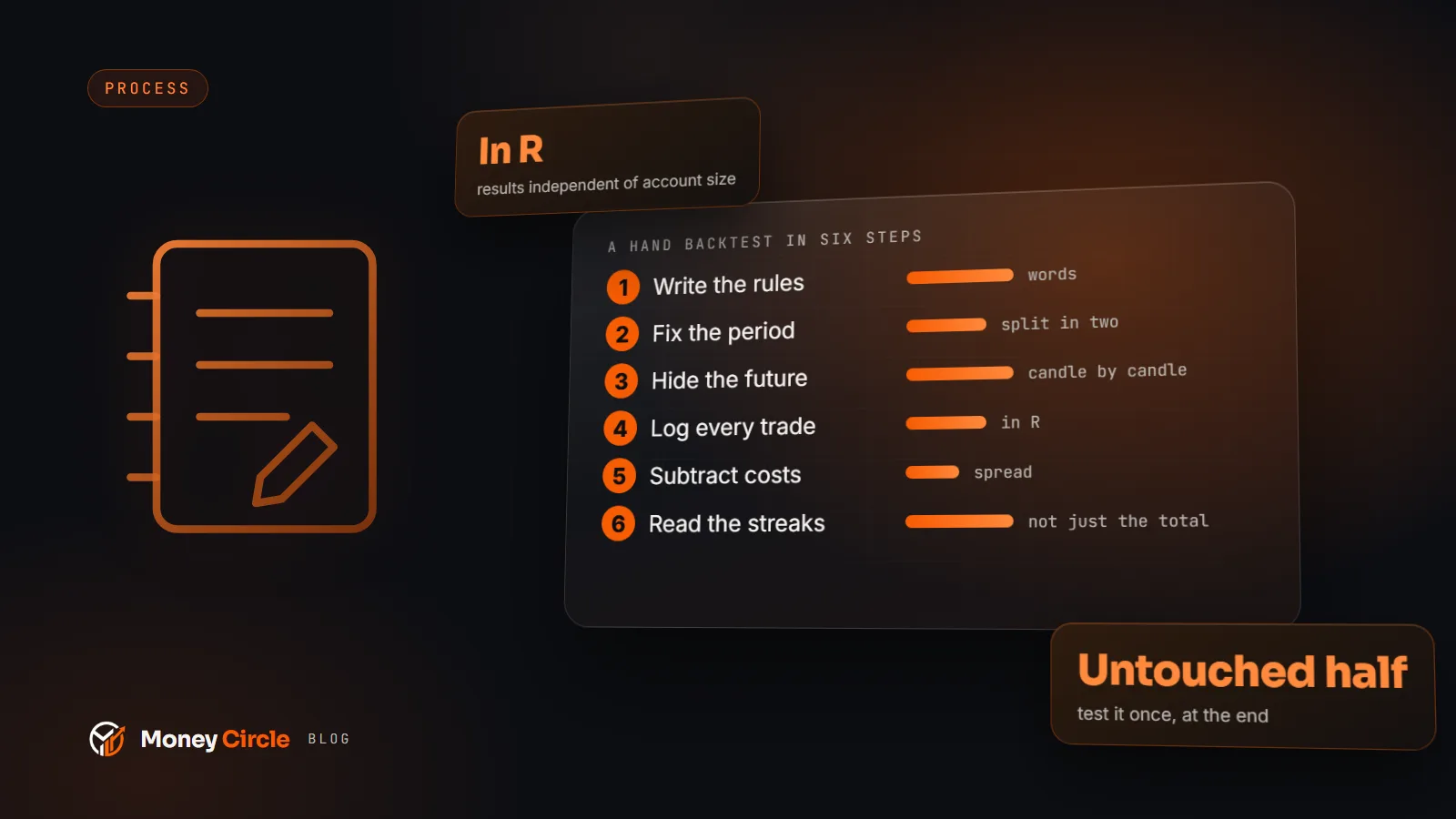
- Which markets did I take trades in, and how did they go in R?
- Which markets did I watch without trading, and did watching them cost me time?
- Were there markets where I broke my rules more often? Why?
- Should anything come off the list, or should one thing go on?
Keep it from growing back
The list will try to grow. Someone mentions a market in a chat, a chart looks dramatic, a headline catches your eye. Use a simple gate:
- New ideas go on a separate "to study" note, not onto the watchlist.
- A market can move from "to study" to the watchlist only after you have reviewed its history, checked costs and hours, and written how your setup applies to it.
- For each market added, one must leave, so the number stays fixed.
Common mistakes
- Chasing what moved most today. Big movers attract attention because they have already moved. Build the list from your plan, not from a leaderboard.
- Too many markets in one theme. Duplicated exposure can hide inside a long list.
- No levels marked. Without prepared charts, the list is just a menu of distractions.
- Never pruning. A list that only grows ends up as noise.
Your next step
Today, write your constraints, choose three to five markets, set the entry criteria for the list and save chart layouts with levels marked. Tomorrow, rank them before your session. Next week, review and prune.
The Money Circle Academy includes lessons on preparing your charts, and our trading plan template has a line for markets and sessions.
Trading involves risk of loss; a watchlist helps you focus but does not predict outcomes, and this is educational content, not financial advice.
Educational content, not financial advice. Trading involves risk of loss.
Learn it, log it, review it on Money Circle
Included with every paid Money Circle membership: Trader Reflect and 2 ChartViews AI analyses a day.
Guides
Continue in the ecosystem
 ChartViews AI
 Trader Reflect
More from the Money Circle Blog
Get the free Trading Plan Template
A printable plan with your rules, risk and review routine, plus the weekly market outlook by email. Unsubscribe anytime.