

What Is a Prop Firm Challenge, and What Are You Actually Buying?
A funded-account evaluation is a product with rules, a fee and a pass rate. Here is what the fee buys, what the rules mean in practice, and the questions worth asking before you pay.
A prop firm challenge is an evaluation. You pay a fee, trade a simulated account under a set of rules, and if you finish inside those rules you move on to the firm's next stage under its own terms, usually with a share of the profits.
That is the whole product. Everything else — the account sizes, the badges, the countdown timers — is packaging around those three parts: a fee, a rule set, and a profit split.
What the fee actually buys
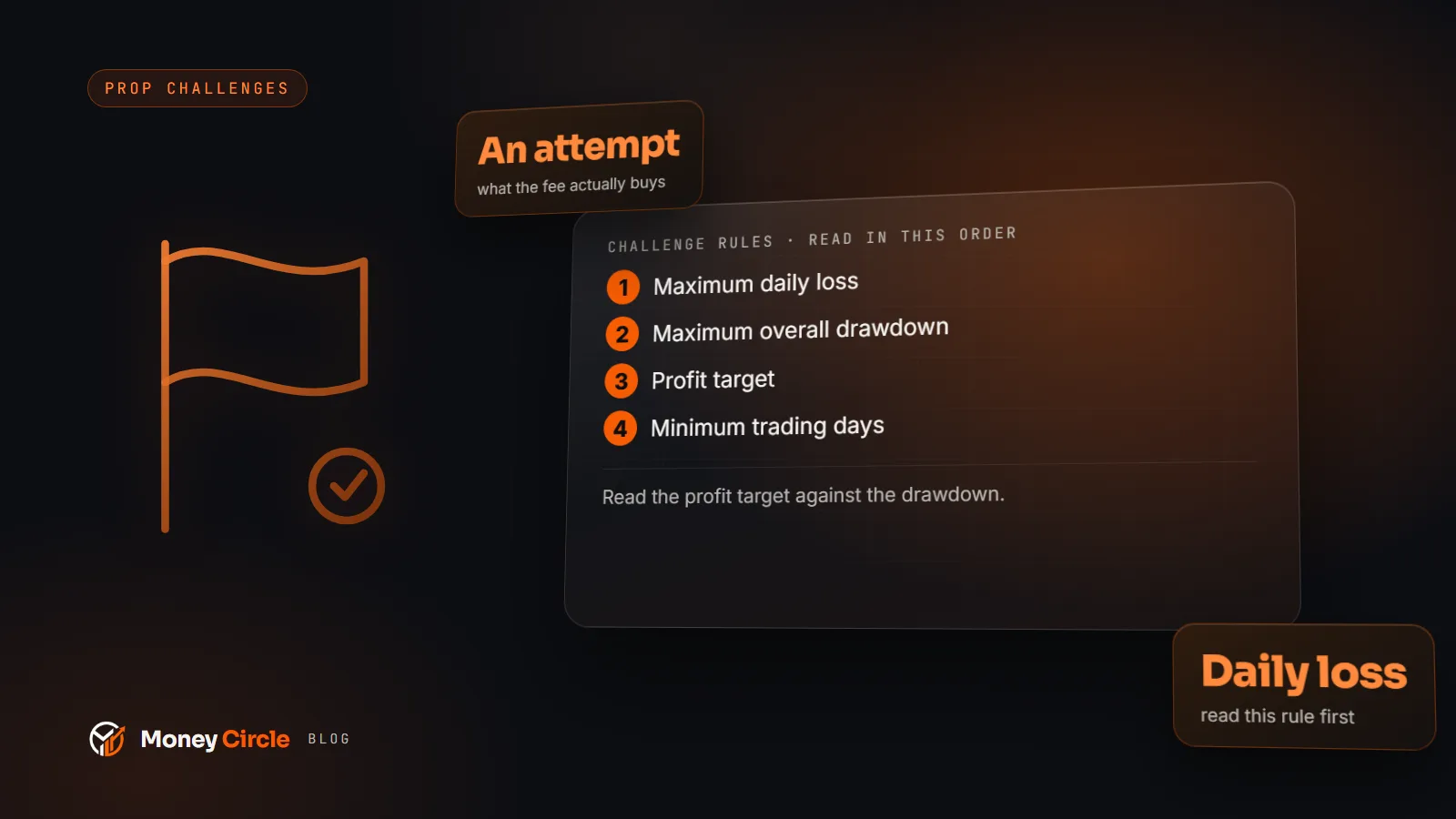
The fee buys an attempt, not an account. This is the part most people get wrong on their first purchase.
If you break a rule on day two, the attempt is over and the fee is spent. Some firms include a free retry, some sell one, some do neither. That single detail changes the real cost of a challenge more than the headline price does.
The rules that end most attempts
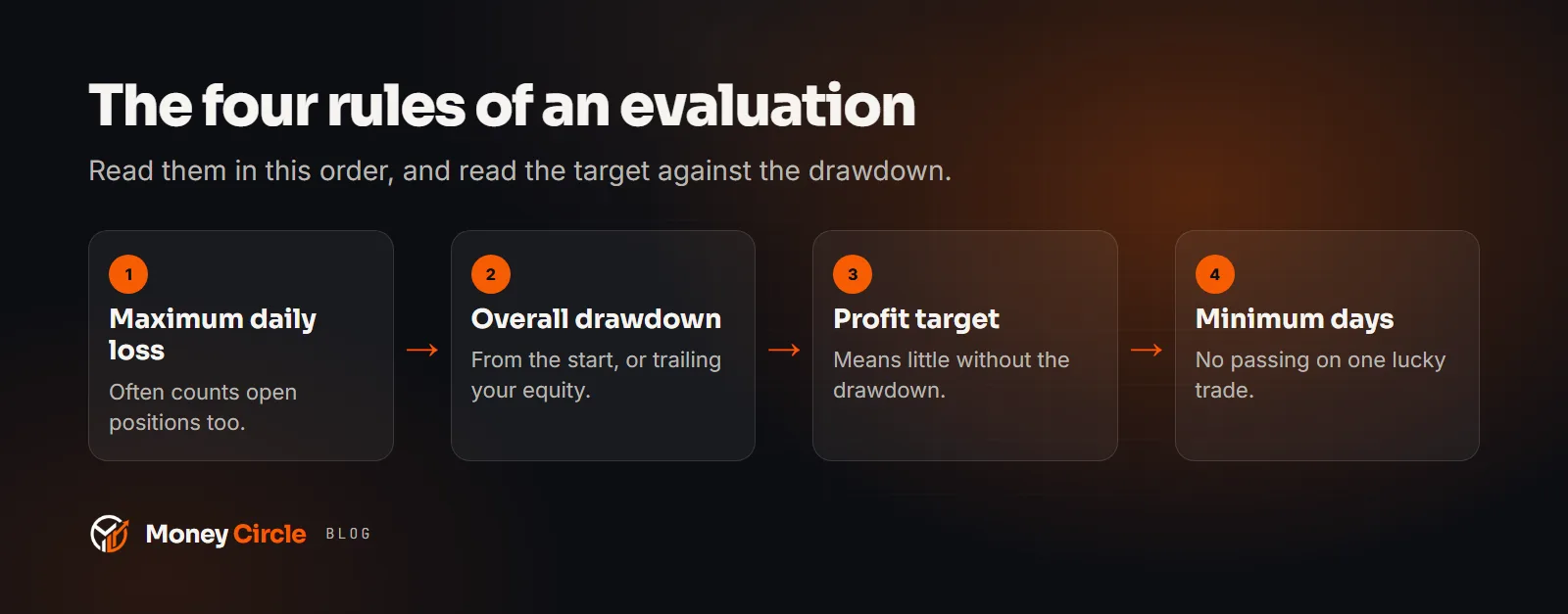
Almost every evaluation is built from the same four constraints. Read them in this order:
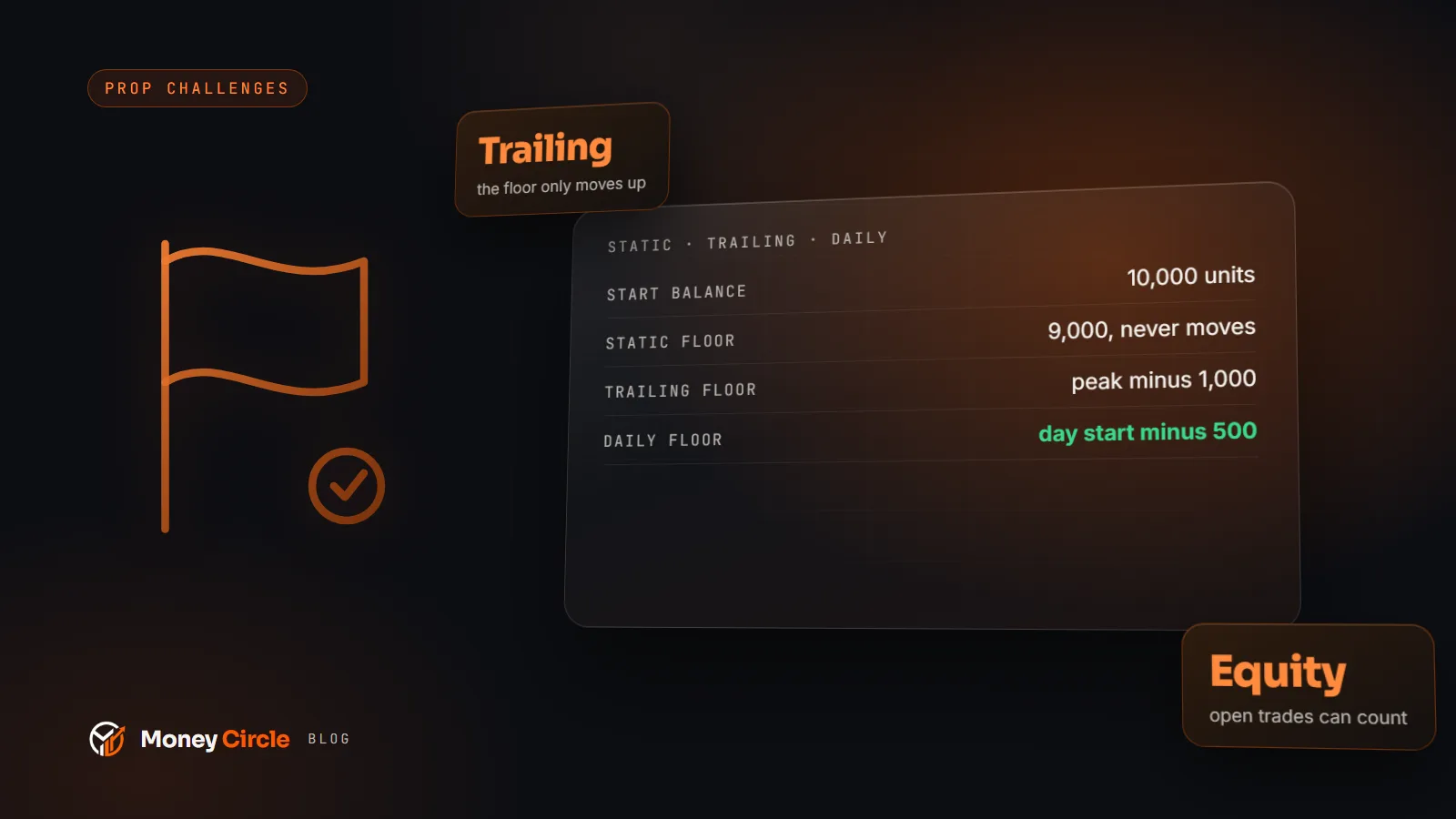
- Maximum daily loss. How much you may lose in one day before the account is closed. This is what ends most attempts, and it usually counts unrealised losses too — an open position going against you can breach it before you have closed anything.
- Maximum overall drawdown. How far the account may fall from its starting balance, or from its highest point. "Trailing" drawdown follows your equity up, which means a good week raises the floor you must stay above.
- Profit target. What you must reach to pass. On its own it means little; read it against the drawdown.
- Minimum trading days. Stops somebody passing on a single lucky trade — and stops you passing quickly even if you could.
Questions worth asking before you pay
- Is the drawdown measured from the starting balance or does it trail your equity?
- Does the daily loss limit include open positions?
- What is the payout schedule once funded, and what is the minimum?
- Are there restrictions on news trading, holding over the weekend, or automated systems?
- If you breach, is a retry free, discounted, or full price?
Where Money Circle fits
We do not run challenges and we do not fund accounts. Whichever provider you choose, read its current rules on its own site before you pay: terms change often.
Before your first attempt
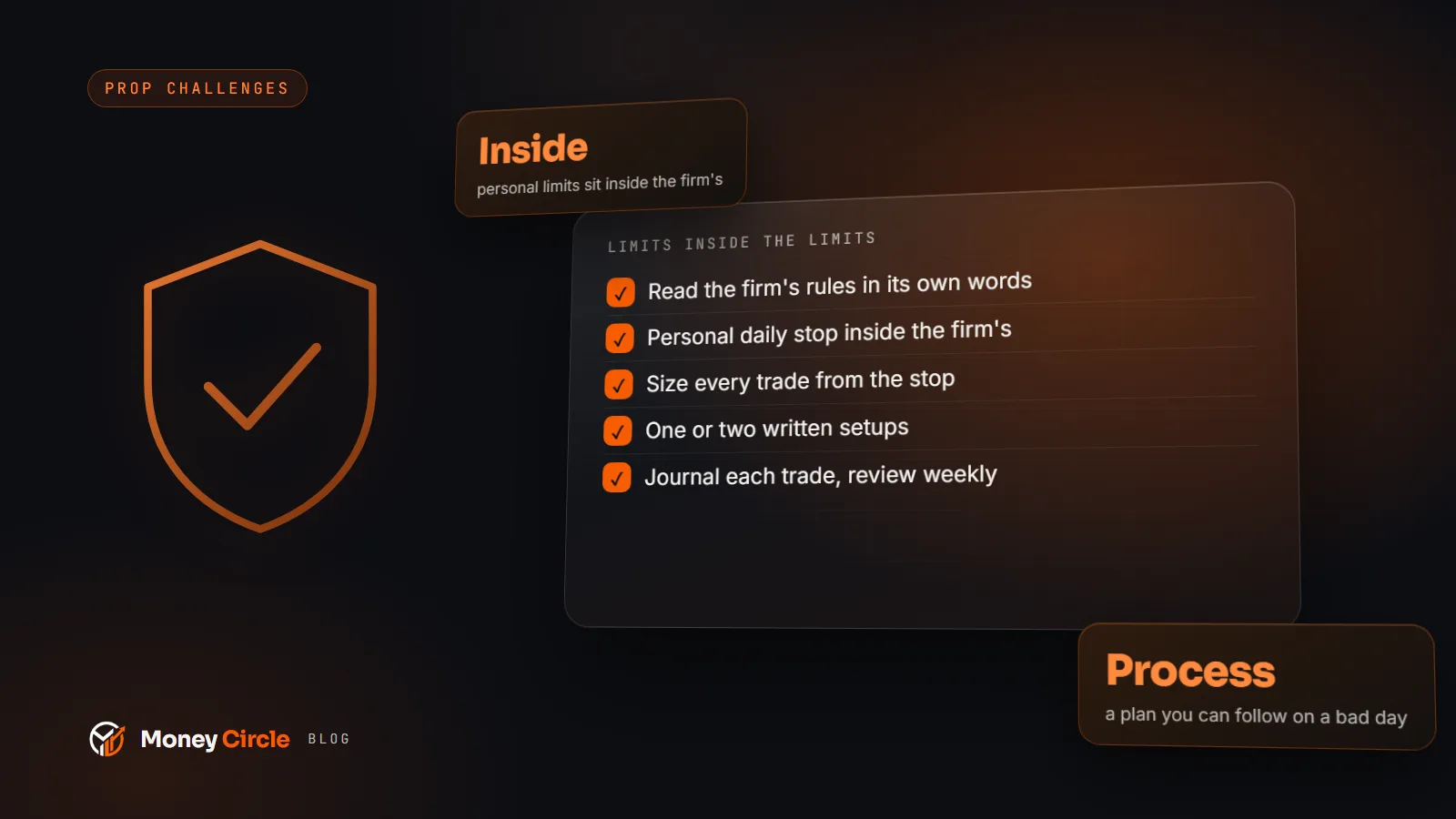
The traders who pass are rarely the ones with the best entries. They are the ones whose losing days are small enough that a bad week does not end the account.
That is a habit, and habits are measurable. A trading journal that records what you actually did — not what you meant to do — will tell you whether you are ready for a rule set with a hard daily limit long before a firm's dashboard does.
Educational content, not financial advice. Trading involves risk of loss.
Learn it, log it, review it on Money Circle
Included with every paid Money Circle membership: Trader Reflect and 2 ChartViews AI analyses a day.
Guides
Continue in the ecosystem
 ChartViews AI
 Trader Reflect
More from the Money Circle Blog
Get the free Trading Plan Template
A printable plan with your rules, risk and review routine, plus the weekly market outlook by email. Unsubscribe anytime.